The laydown yard that gave away a phase two before the rezoning notice did
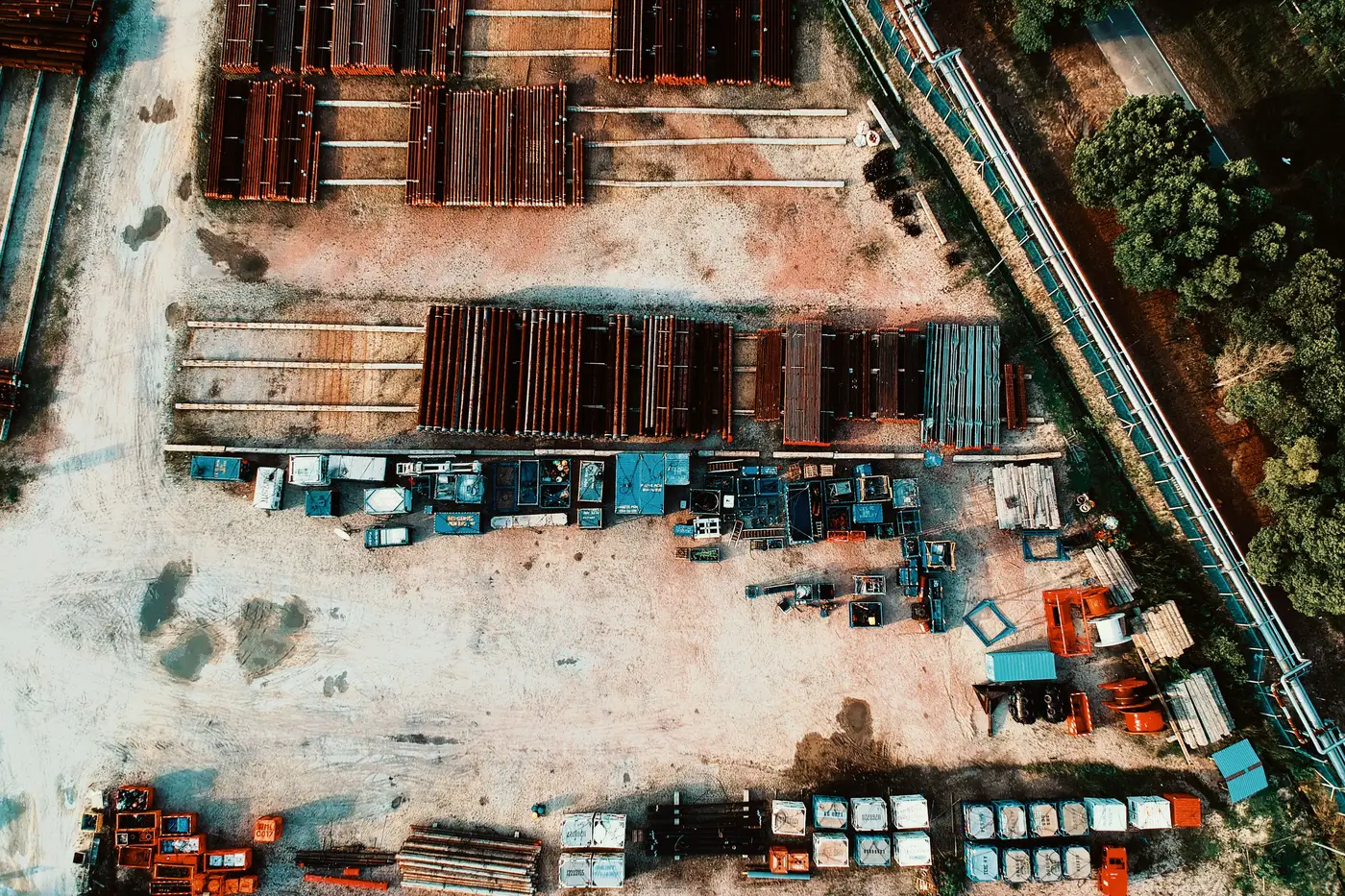
Every analyst who's walked a submarket long enough has a version of this story. A site finishes its first building, the leasing signs go up, and the fence comes down around the parking lot like the project is done. Except the laydown yard doesn't shrink. It moves.
That's the tell. Not a permit filing, not a planning commission agenda, not even a conversation with the leasing broker who's technically not supposed to talk about phase two yet. It's the gravel pad.
Here's what happens on the ground. A contractor closing out phase one doesn't tear down the staging area, they relocate it. Rebar bundles that were stacked near the old foundation line show up on a new pad thirty yards over. A second crane base gets poured before anyone's filed for the crane permit on the next building.
Material deliveries that should be tapering off as a job wraps instead hold steady or tick up, because the general is already receiving steel for a structure that doesn't have an address yet. None of that requires a public notice. None of it shows up in a council packet. It shows up as a change in the footprint of dirt and gravel sitting next to a building that otherwise looks finished.
The timing gap here is the whole story for anyone tracking a submarket for competitive supply. A rezoning notice, where one's even required, can trail the commitment to build by two quarters or more. Developers don't wait for entitlement certainty to start ordering long-lead items, because a six-month slip on structural steel fabrication is a worse problem than carrying some risk on a parcel they're confident they'll get approved. So the yard fills up first. The paperwork catches up later.
The problem is that nobody drives the same industrial parcel twice a quarter just to check on a staging pad. You've got twenty, thirty competing sites across a submarket, and the ones worth re-checking are rarely the ones with a visible crane. A quiet expansion of laydown space behind a finished building is exactly the kind of thing that gets missed when the windshield survey focuses on where the activity obviously is.
What you actually want is a consistent read on every site in the set, on a schedule, so a change in the staging footprint shows up as a change, not as something you happened to notice because you drove past on the right Tuesday. Catching that shift two quarters early is the difference between modeling a competitor's delivery date off a filed permit and modeling it off the materials already sitting on the ground.
This is the kind of pattern Construction Pipeline is built to catch: a quarterly status read across every site in a submarket, pulled from satellite imagery, so a laydown yard that's quietly outgrown its building gets flagged the same way a new foundation pour does. Every site in the set gets the same pass on the same schedule, which is what catches the one that moved while attention was on the others.
If there's a submarket where you'd rather know about phase two before the notice posts than after, that's the conversation worth starting.