How to tell a parking structure from the tower shell in satellite imagery
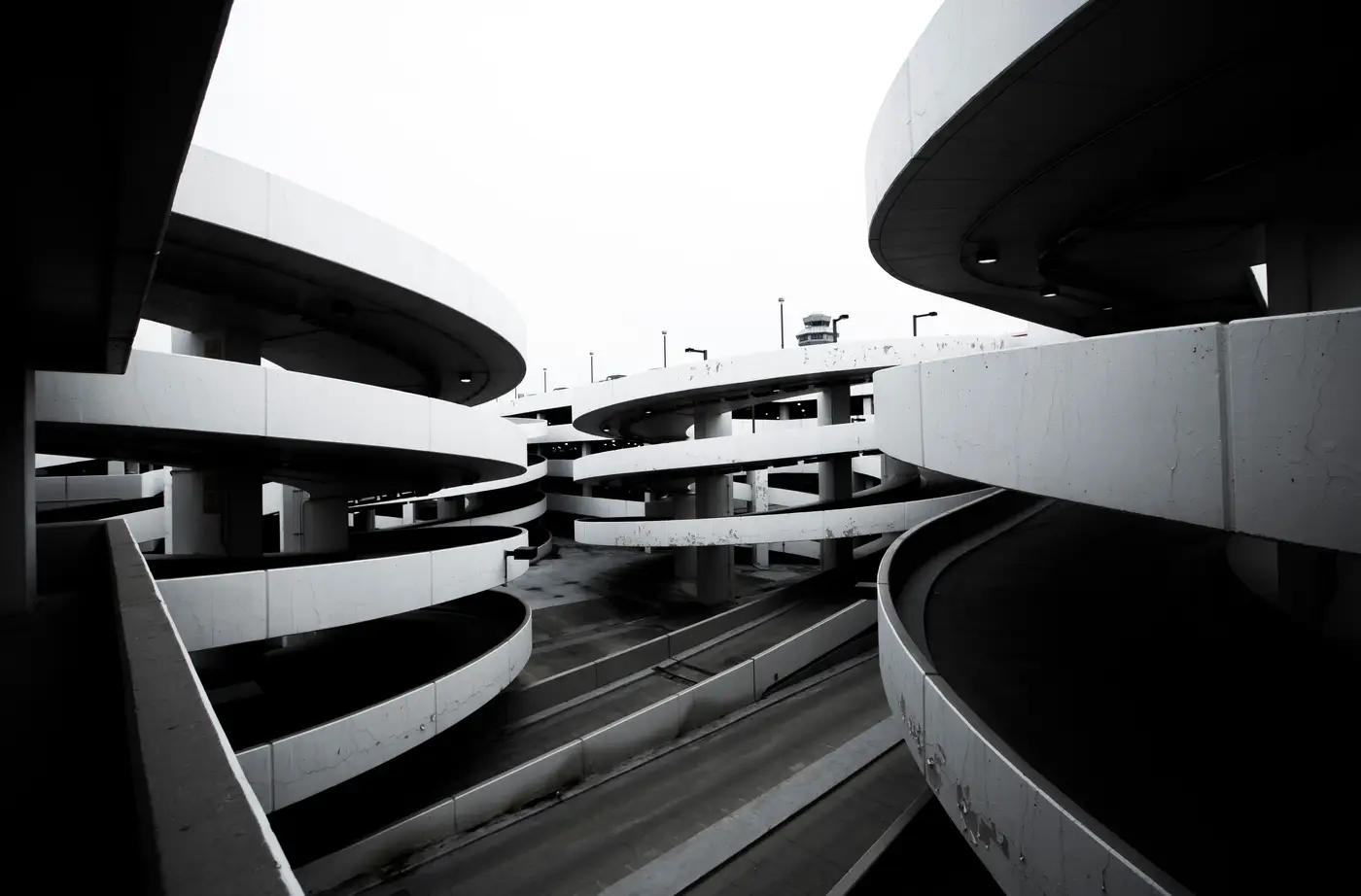
Pull up a quarterly image of a mixed-use site at month four and you'll often see two concrete masses rising next to each other at roughly the same rate. One is the tower. One is the parking structure. From directly overhead, at that stage, they can look like the same building split by a construction fence.
They aren't, and coding them as one site instead of two separate structures is one of the more common ways a delivery estimate drifts off by a quarter or more.
What actually separates a garage from a shell
A standalone parking structure gives itself away in a few consistent places once you know where to look.
Floor plate repetition is the first tell. A parking deck's levels are identical slabs stacked with no variation, because there's no unit mix, no amenity floor, no mechanical penthouse breaking up the rhythm. A residential or office shell almost always shows some articulation: a stepped-back floor near the top, a double-height lobby level, a roof deck that reads differently than the floors below it.
Ramps are the second. A helical or straight ramp bay shows up as a diagonal slab visible in the footprint, usually at one corner or end of the structure. Nothing in an occupied building shell looks like that.
Skin, or the lack of it, is the third and usually the most reliable at a glance. A parking structure frequently stays open-air for its entire life, precast panels or screen walls with no glazing to install. So a garage that's structurally topped out will often look "unfinished" forever, dark open bays instead of reflective curtain wall, because that's the finished state. A tower shell at the same stage is mid-transition: glazing goes in floor by floor, and you can usually see the installed floors reading lighter than the raw concrete floors still above the glazing line.
And the core matters. On an occupied building, the elevator and stair core typically leads the floor plates by a level or two during the climb, a visible vertical shaft poking a bit higher than everything around it right up to topping out. A parking structure rarely has that kind of core. It reads flat and even from first pour to last, no shaft leading the pack.
Why this throws off a delivery estimate
The practical problem shows up when someone is tracking the site quarter over quarter and treats visible change, or the lack of it, as a proxy for overall progress.
Parking structures move fast and then go quiet. Precast erection on a deck can close out in a couple of quarters, and after that the imagery barely changes for the rest of the project, interior striping and ADA signage and equipment don't register from overhead. If you're watching the garage portion of a site and it looks frozen, it's easy to read that as the project stalling when the garage is actually done and sitting there finished, waiting on the tower.
The reverse mistake is just as common. A podium garage often tops out and opens for staff or tenant parking well ahead of the residential or office floors above or beside it. If an analyst spots a topped-out concrete structure at the right height and codes the whole site as structurally complete, the model is now running on the garage's schedule instead of the tower's. The tower can still be three or four quarters from its own topping out.
The fix is simply treating the parking structure and the main building shell as two separate construction reads on the same site, each with its own stage, rather than one blended number. A site-level status table that tracks every structure on a parcel against its own stage rather than averaging the parcel tends to catch exactly this kind of mismatch before it bends a delivery forecast. That's the structure-level read Construction Pipeline is built to produce: a quarterly stage per site, garage and shell tracked separately where the parcel has both.
If you're already pulling imagery by hand to sort this out project by project, it's worth seeing what a structure-level read looks like for your own submarket.